Train on the Same Advanced Technology You’ll Fly
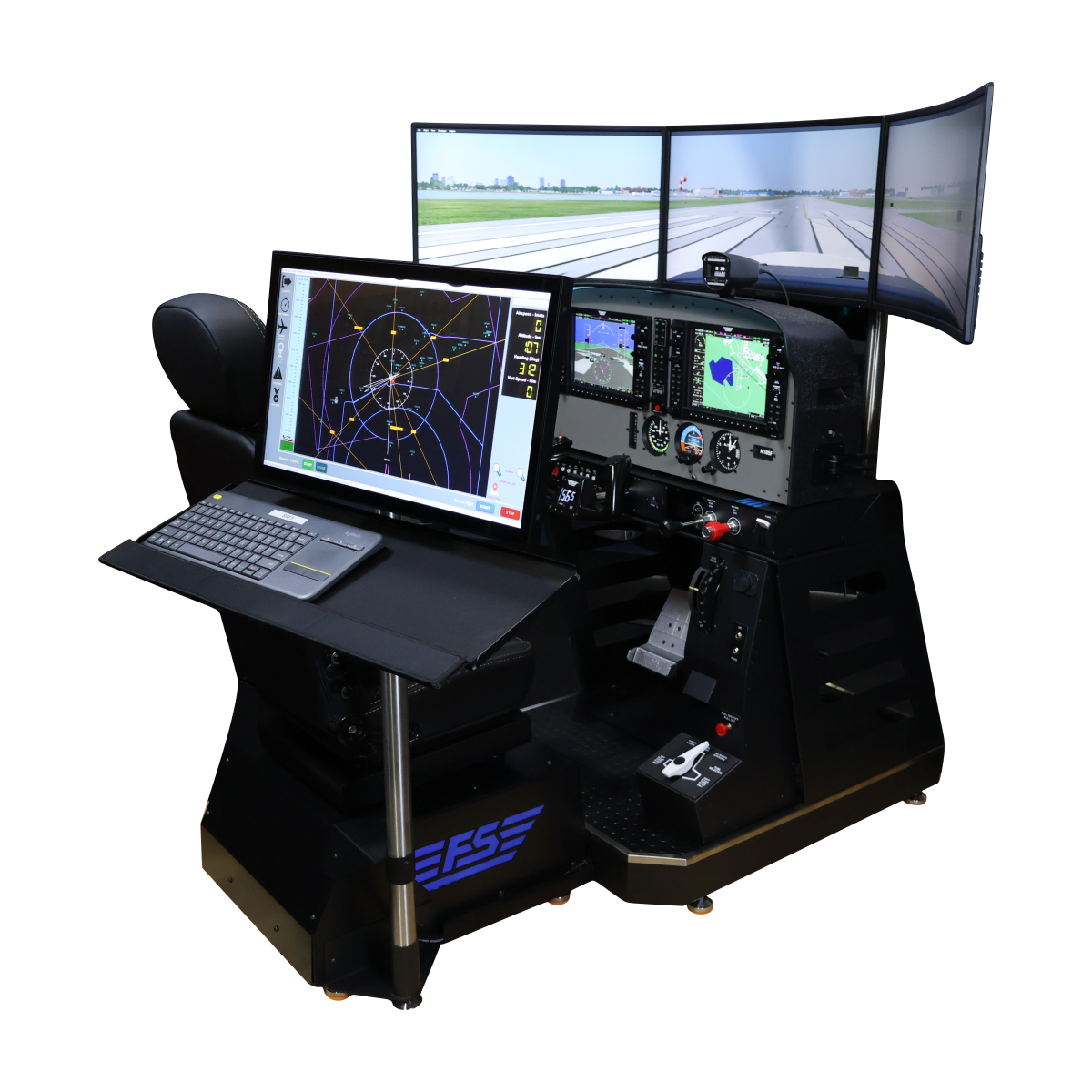
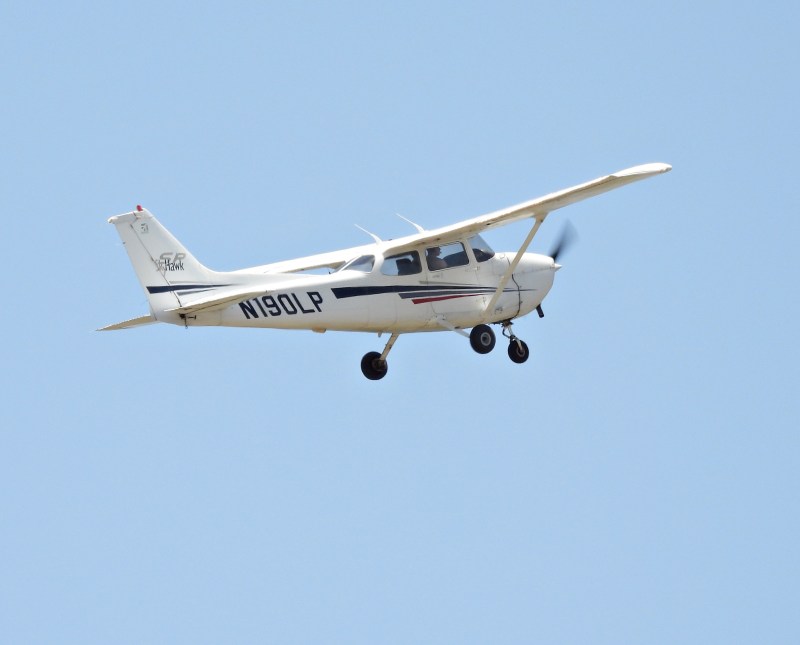
Anthelion is adding a brand-new Advanced Aviation Training Device (AATD) to its fixed-wing program — an FAA-approved flight simulator built by FlightSimWings, modeled on the Cessna 172 S/SP you already train in. It’s the same aircraft, the same avionics, and the same procedures, without engine time, weather delays, or the hourly rate of the real airplane.
We are one of the few flight schools in the Long Beach area offering this level of AATD simulation — a level of technology usually reserved for university aviation programs and airline-pipeline academies.
WHAT MAKES THIS SIMULATOR DIFFERENT
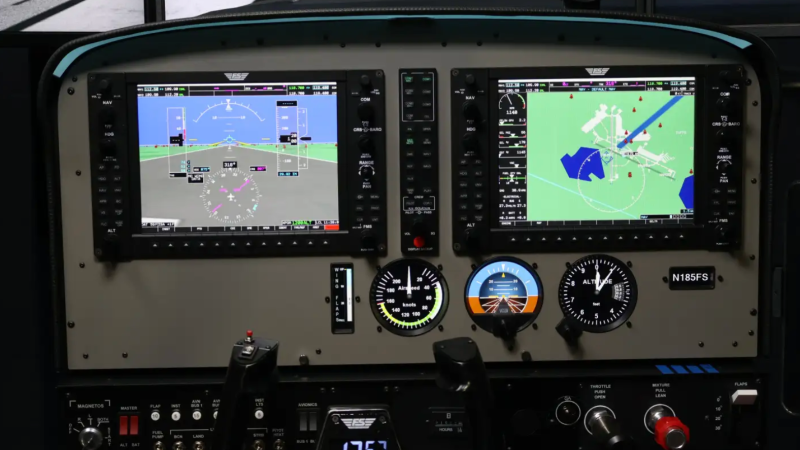
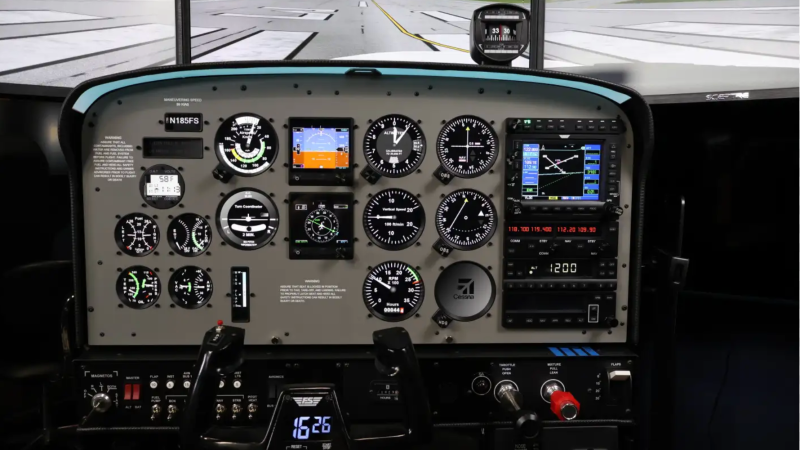
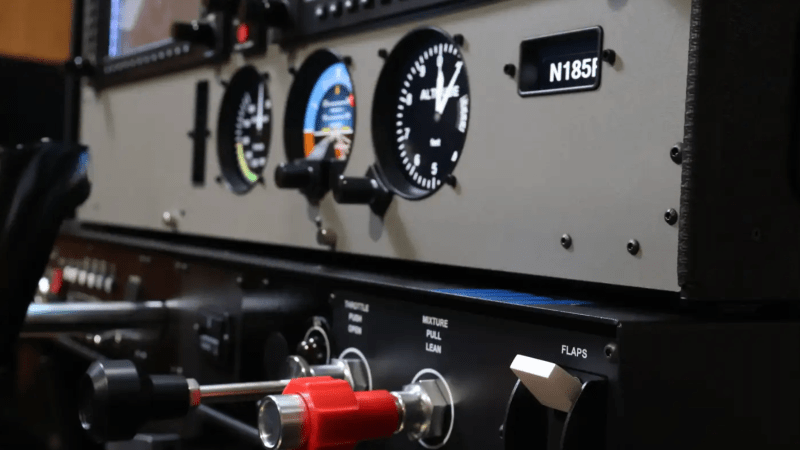
- Swap the entire panel, not just the software. Our simulator uses FlightSimWings’ interchangeable instrument panel system, so the same cockpit can be reconfigured between a full-glass Garmin G1000 panel, a hybrid dual-G5-with-GNS-530 panel, and a classic six-pack analog panel with GNS 530 — letting you train and test on whatever avionics you’ll actually be flying.
- Real hardware, not a video game. Three 27-inch curved visual displays, a 21.5-inch touchscreen instructor station, an ACE flight control console with go-around button and Hobbs meter, a motorized trim wheel, aluminum rudder pedals, and real aircraft headset jacks.
- An actual instructor’s seat. Your CFI sits alongside you at a dedicated instructor station, able to inject weather, failures, and traffic in real time — not just watch over your shoulder.
- FAA-approved AATD status. This is the top tier of FAA-approved training device below a full flight simulator, and it’s approved for logging flight currency, instrument proficiency checks, and substantial credit toward the instrument, commercial, and ATP certificates.
AATD VS. BATD: WHY THE DIFFERENCE MATTERS
Not every “flight simulator” is created equal in the eyes of the FAA. A Basic Aviation Training Device (BATD) is the entry-level tier; an Advanced Aviation Training Device (AATD) is the tier above it, and the two are not interchangeable for training credit:
- Instrument rating: log up to 20 hours of AATD time toward your 40-hour instrument time requirement — double the 10-hour cap allowed in a BATD (14 CFR § 61.65(i)).
- Commercial certificate: apply up to 50 hours of AATD time toward your 250-hour commercial pilot certificate under 14 CFR § 61.129(i) — a credit a BATD does not carry.
- Sharper realism where it counts: partial-panel failures, coupled autopilot behavior, and GPS/WAAS approach procedures replicate a real G1000 or G5 panel precisely, instead of the simplified generic instrumentation typical of a BATD.
- Built for what’s next: when our Part 141 syllabus for the Cessna 172 is approved, published FAA guidance allows Part 141 schools to credit AATD time for a meaningful share of required instrument training — a benefit that compounds as our fixed-wing program grows.
HOW YOU'LL USE IT
- Build and rehearse instrument procedures — holds, approaches, partial-panel emergencies — before flying them for real
- Keep training moving on days the Cessna can’t fly, with hours that actually count toward your certificate
- Knock the rust off for a flight review, instrument proficiency check, or check-ride prep, on your schedule and at a lower hourly cost than the airplane
- Get comfortable on a different avionics configuration before you fly it, simply by swapping the panel
READY TO TRY IT?
Contact us to schedule sim time on its own, or bundle it into your Private, Instrument, Commercial, or CFI training package.