
WHAT IS INSTRUMENT RATING IR(A)?
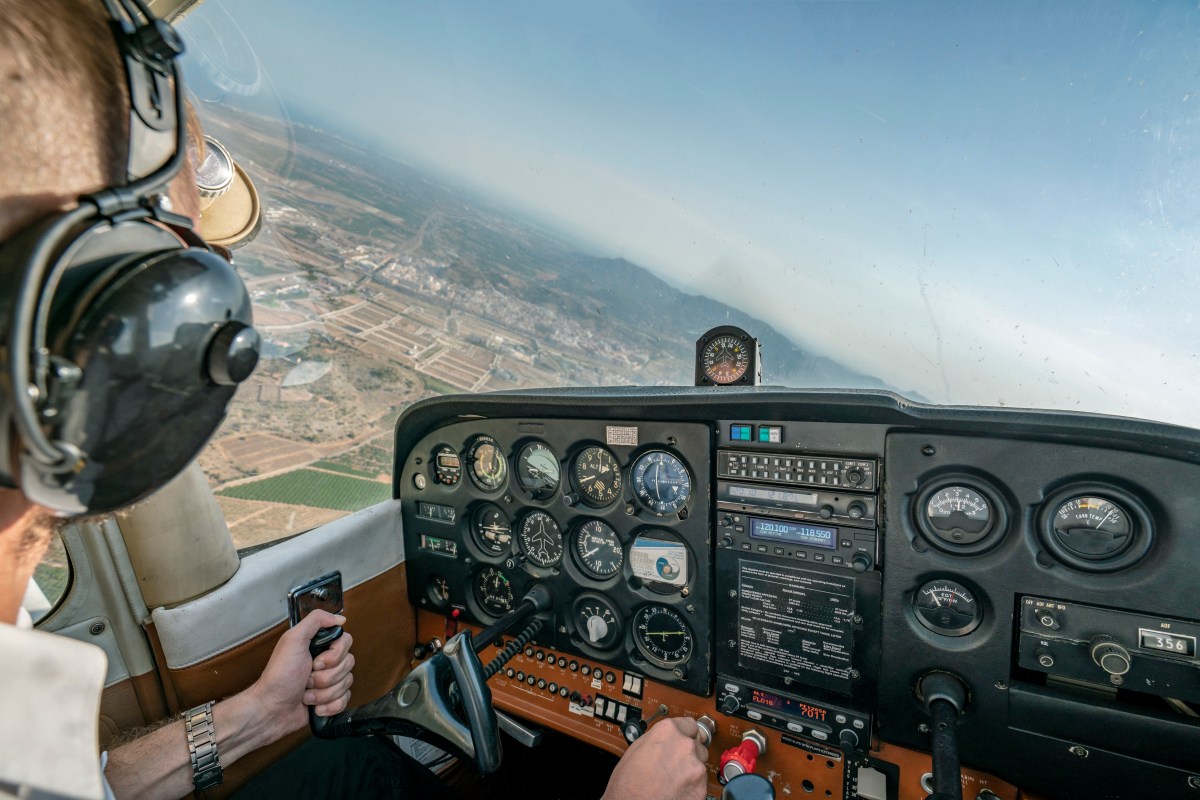
Flying by sole reference to the instruments is a skill that is acquired through the instrument rating program. Its purpose is to prepare you for flight in reduced visibility or poor weather.
It is important to get this training in-between your private and commercial pilot training. An instrument rating also makes you a more proficient and safe pilot by helping you become more knowledgeable with aviation in general.
The skill of being experienced with on-board flight instruments is so unique that it is commonly becoming a requirement for most commercial flight jobs.
Make sure to give yourself a jumpstart in your aviation career by getting your instrument rating through Anthelion Helicopters.
-
- English language proficiency (reading, speaking, writing, understanding)
- Ground training from an authorized instructor or an approved home-study course
- Logbook endorsement confirming knowledge test readiness
- Flight training in an aircraft, simulator, or approved training device
- Logbook endorsement confirming practical test readiness
- Pass the required knowledge test
- Pass the required practical test
-
- 50 hours of cross-country flight time as pilot-in-command, of which at least 10 hours must be in an airplane
- Minimum 40 hours of actual or simulated instrument time, at least 15 hours of which must be with an authorized instructor who holds an instrument-airplane rating
- One instrument cross-country flight of 250 nautical miles along airways or by directed routing, including an instrument approach at each airport and three different kinds of approaches using different navigation systems
-
-
- 3 hours of instrument flight training within the 2 calendar months preceding the practical test
Up to 20 of your 40 instrument hours can be logged in our new AATD flight simulator — double the credit allowed in a basic training device (BATD). See our Flight Simulator page for details.
COMING SOON — PART 141 TRAINING: Once our Part 141 syllabus is approved for the Cessna 172, structured Part 141 instrument students will be able to apply an even greater share of their training time in our AATD simulator toward this rating.
-
-
The program utilizes:
- Aircraft: Cessna 172 (TAA)
- Avionics: Glass-panel primary flight and multi-function displays (Garmin G5’s) with integrated GPS navigation and autopilot
- OPTIONAL: AATD With choice of displays (Steam, Dual G5’s & G530W or Garmin G1000)
This combination provides a thoroughly modern training experience, enabling comprehensive instrument proficiency development.
FREQUENTLY ASKED QUESTIONS
-
You need a Private Pilot certificate, or to be earning it at the same time. What catches most pilots out is the requirement for 50 hours of cross-country time as pilot in command, 10 of them in airplanes. Most new private pilots have far less. We’ll look at your logbook and plan cross-country flights that build this time while your instrument training moves forward.
-
The FAA requires 40 hours of instrument time, 15 of them with an instrument instructor. Instrument time you already logged during Private training counts toward the 40. Most pilots are checkride-ready in about 25–35 hours of instrument training, depending on how often they fly and how quickly they master the scan and procedures.
-
Up to 20 of the 40 hours can be logged in our AATD with an instructor. That’s the maximum the FAA allows for this device class. We use it for what a simulator does best: holds, approaches, and partial-panel failures that you can pause, repeat, and review. Then we take those skills into the airplane. See the AATD.
-
Often, yes. The coastal marine layer in Long Beach gives you real instrument conditions that many training locations rarely see. Beyond flying approaches, you’ll learn to file and fly IFR flight plans, work with SoCal Approach in some of the busiest airspace in the country, handle changes to your route, and make go/no-go decisions on weather. Those skills are what make the rating useful.
-
Flying 3–4 times a week, most pilots finish in 2–3 months, and full-time students can finish sooner. Weather rarely stops instrument training here: low ceilings are part of the lesson, and the simulator covers the few days that are truly unflyable.
-
First you pass the FAA Instrument Rating knowledge test. The checkride with an examiner then starts with an oral exam on regulations, weather, charts, and your flight planning. The flight is in the airplane: approaches, holds, unusual attitudes, and a partial-panel scenario, flown to FAA Airman Certification Standards. We finish with a mock checkride before you go. Once you’re rated, the next step is the Commercial.