Fixed-Wing Training · Long Beach Airport (KLGB)
Experience is the cheaper way to learn to fly
Every instructor on our fixed-wing team is an experienced pilot, not a new CFI building hours on your dime. That experience gets you to your checkride in fewer hours, saves you thousands, and makes you a better pilot along the way.
Private Pilot · Total flight hours
At local Cessna 172 rates, that’s $4,000 or more back in your pocket.
The sticker-price trap
The hourly rate is the wrong number to compare
You don’t pay for one hour of flight training. You pay for every hour it takes to finish.
Most flight schools are staffed by newly certificated instructors who are building time for an airline job. They’re often good people, but they’re learning to teach while they teach you. Lessons get repeated, cross-countries get flown twice, and simulator time goes unused. The hours add up, and you pay for every one.
We aren’t the cheapest school per hour. We don’t try to be. We’re built to be the cheapest place to actually finish, because experienced instructors know how to get you to checkride standard efficiently and know every rule that lets your training count twice.
Before you choose a school, ask what its students pay in total. Then try the numbers yourself.
Private pilot: total cost check
Compared with a Cessna 172 school
| School | Hours | Rate | Total |
|---|---|---|---|
| Typical local school, Cessna 172 | 75 | $270/hr | $20,250 |
| Anthelion, Cessna 172 | 57 | $270/hr | $15,390 |
$4,860 saved
Finishing in 57 hours, our rate could be up to $355/hr ($85 more per hour than the typical school) and you’d still pay less overall.
Rates are example figures. Totals cover flight time only. Every student is different, and your hours depend on your schedule and progress.
Private pilot: total cost check
Compared with a Cessna 150 school
| School | Hours | Rate | Total |
|---|---|---|---|
| Typical local school, Cessna 150 | 75 | $225/hr | $16,875 |
| Anthelion, Cessna 172 | 57 | $270/hr | $15,390 |
$1,485 saved
Finishing in 57 hours, our rate could be up to $296/hr ($71 more per hour than the typical school) and you’d still pay less overall.
Rates are example figures. Totals cover flight time only. Every student is different, and your hours depend on your schedule and progress.
Commercial + CFIYour CFI training, built into your commercial
At most schools, the CFI is a separate course after your commercial: another 20–30 hours and often $10,000 or more. We fold most of that training into your commercial syllabus, so you fly your commercial maneuvers from the right seat and learn to teach them as you master them.
The usual route
Fly the maneuvers to commercial standards.
Certificate in hand.
Re-learn the same maneuvers from the right seat, now as a teacher.
+20–30 hrs · often $10k+
The Anthelion route
Fly from the right seat and learn to explain every maneuver while you master it.
Certificate in hand, already flying to CFI standard.
A short final prep, then you’re ready.
~1–2 hrs
CFI applicants still complete the FAA knowledge tests and required endorsements, including spin training. We plan those into your commercial timeline too.
Where the savings come fromExperienced instructors make every hour count
None of this is a shortcut. It’s what instructors learn after years of teaching, and what a new CFI hasn’t had the chance to learn yet.
TechniqueTeaching that sticks the first time
An instructor who has seen hundreds of students knows where people struggle before you get there. Fewer repeated lessons, fewer wasted hours.
Simulator creditEvery AATD hour that’s allowed
FAA rules let a set amount of approved simulator time count toward your ratings. We know exactly how much counts for each one and use our AATD to cover it at a fraction of aircraft cost.
Cross-country planningFlights that tick several boxes
Cross-country, night and solo requirements can overlap. We plan your trips so one flight satisfies as many requirements as the rules allow, instead of flying the same route twice.
Combined syllabusCFI inside your commercial
Commercial maneuvers flown and taught from the right seat, so the CFI becomes a short final step rather than a whole extra course.
The part that isn’t on the invoiceFinishing faster is half of it. Flying better is the other half.
Passing a checkride and being a confident pilot aren’t the same thing. Experienced instructors teach both.
Real-world judgment
You learn from someone who has made real decisions about weather, fuel and diversions, not just studied them.
Busy airspace, calmly
You train at Long Beach, a towered airport under LAX’s Class B. You’ll be comfortable on the radio and in busy airspace from early on.
A career view
Our instructors have flown professionally. They can tell you what employers look for, not just what the checkride needs.
What you’ll train inEquipment chosen for efficient training
AircraftCessna 172 · TAA
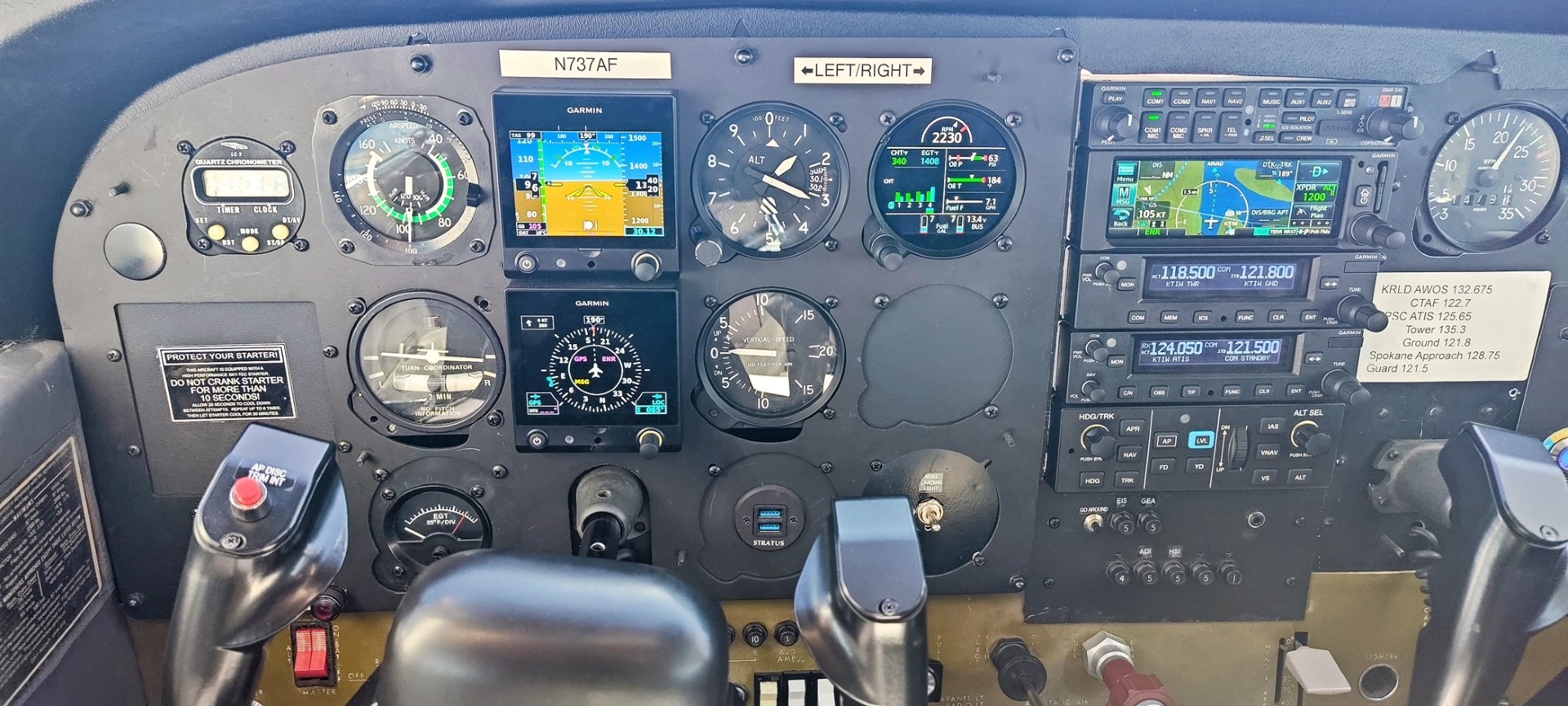
Dual Garmin G5 glass, qualifying as a technically advanced airplane for commercial training.
AircraftCessna 172 · Analog
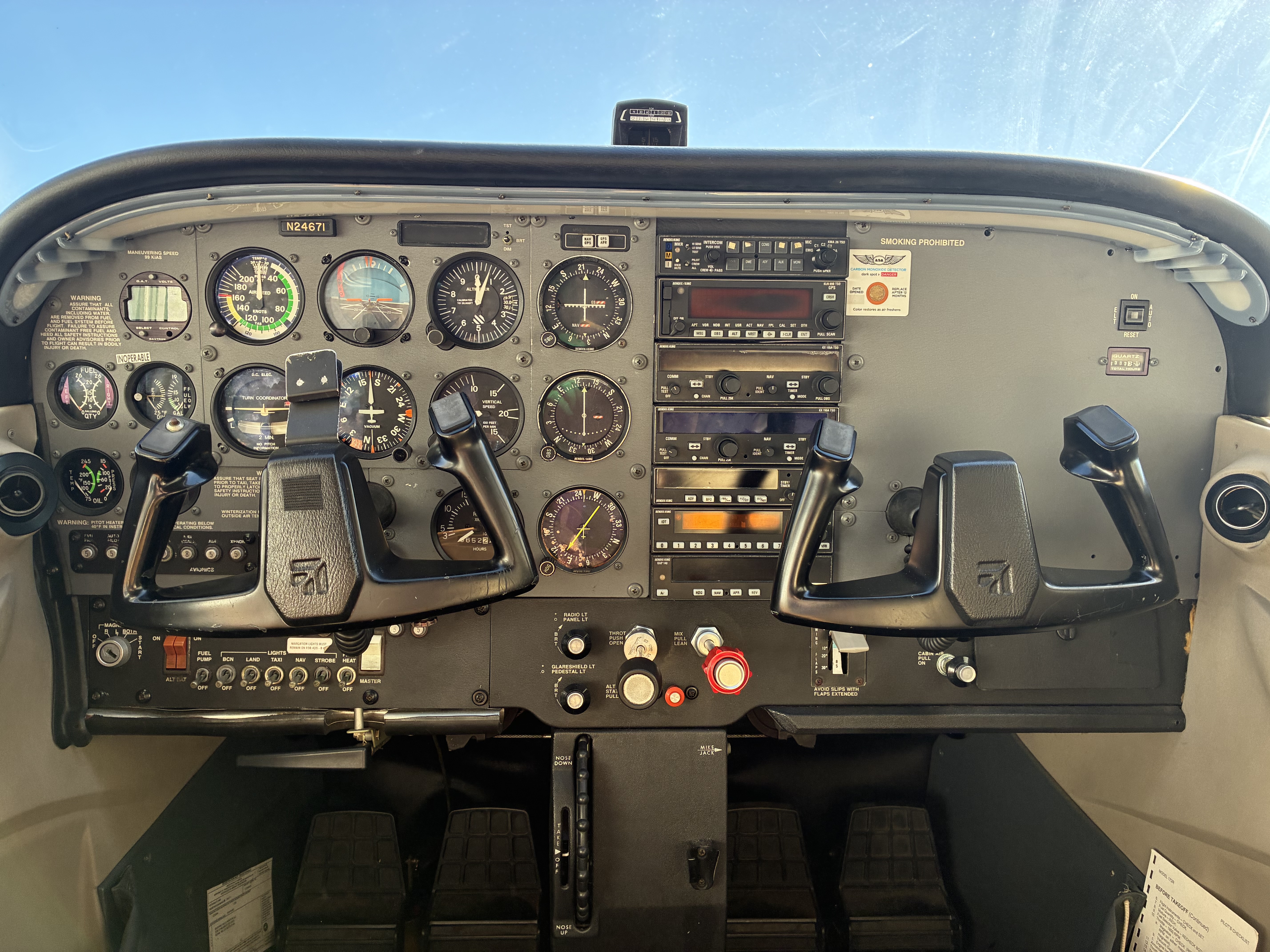
Classic six-pack panel to build solid fundamentals and scan.
SimulatorNew AATD
An FAA-approved advanced aviation training device for creditable sim time.
Add-onHelicopter rating
Train both categories at one school. Dual ratings prepare you for the new powered-lift era.
Cessna 172 AATD Flight Simulator
FAA Add-On Rating
Shopping for a flight school?Ask every school these four questions
Including us. The answers tell you more than the hourly rate.
Total hours times the rate is your real price.
Total flight time matters less than how many students they’ve taken to a checkride.
If there’s no plan for the AATD, you’re likely paying aircraft rates for hours that could cost far less.
If the answer is another full course, ask why.
Call 1 (562) 424-2684
Anthelion Helicopters · Long Beach Airport (KLGB)
Hour figures are typical targets, not guarantees. Actual training time depends on the student’s frequency of training, prior experience, weather and aircraft availability. The national average is a commonly cited industry estimate.
PRIVATE PILOTS LICENSE – PPL(A)
Commercial Pilots License – CPL(A)
INSTRUMENT RATING – IR(A)
Certified Flight Instructor – CFI(A)
Certified Flight Instructor – Instrument (CFII-A)
AIRLINE TRANSPORT PILOT LICENSE – ATP(A)
Cessna 172 AATD Flight Simulator
INTRODUCTORY FLIGHT
FREQUENTLY ASKED QUESTIONS
-
View our fixed-wing flight training rates
You pay for what you fly, billed per hour: the aircraft, your instructor, and ground lessons. Our TAA Cessna 172 is $190/hr wet; the Analog 172 is $180/hr wet; instruction is $90/hr. We also offer a block discount rate with a $5-per-hour discount on flight and ground training. Plan on roughly 11,000–15,000 for a Private Pilot License. FAA exam fees are extra, typically $150 for each knowledge test and 1,000–1,500 for each checkride examiner. Flying 3–4 times a week is the single biggest way to keep your total down, because less time goes to re-learning between lessons. Ask us for a written estimate based on your goals.
-
Flying 3–4 times a week, most students finish their Private in 3–5 months and their Instrument Rating 2–3 months later. The long stretch is building up to 250 hours for the Commercial, which usually takes 6–12 months, often while working as a CFI or renting aircraft. Full-time students who go all the way to CFI typically take 12–18 months.
-
Both lead to the same FAA certificates. Part 61 is flexible: your lessons follow your progress and your schedule. Part 141 follows an FAA-approved syllabus with stage checks, and it allows lower minimum hours for some ratings. Our airplane courses currently run under Part 61. Our Cessna 172 Part 141 curriculum is awaiting FAA approval. If you plan to start after approval, tell us and we’ll let you know as soon as it opens.
-
A Technically Advanced Airplane (TAA) has glass displays, a moving-map GPS, and an autopilot linked to the navigation. That’s the equipment you’ll use in almost any flying job. The practical benefit is that TAA time meets the FAA’s 10-hour complex/TAA requirement for the Commercial certificate. You won’t need to rent an older retractable-gear airplane just to tick that box. We also fly a traditional analog 172, so you can learn both kinds of cockpit.
-
Yes. With an instructor, hours in our FAA-approved AATD can be logged toward the Instrument Rating (up to 20 hours) and the Commercial certificate (up to the limit in the device’s FAA authorization). The simulator can switch between G1000, dual G5/GNS 530, and analog panels. On days of low cloud or maintenance, your training keeps moving. See the AATD simulator.
-
Your first lesson is an introductory demo flight. An instructor briefs you, you do the preflight inspection together, and you fly the 172 yourself once you’re off the ground. Allow about 2–2.5 hours in total. If you enroll, the flight can go in your logbook. Bring government photo ID. If you plan on enrolling afterwards, U.S. citizens also need a passport or birth certificate: the TSA requires schools to check citizenship before training. Non-U.S. citizens need TSA approval first; see our international student page.