
WHAT DOES IT TAKE TO BE A CERTIFIED FLIGHT INSTRUCTOR - INSTRUMENT
Once you’ve earned your CFI – Airplane, the CFII adds the authority to train instrument students and sign them off for their instrument rating checkride — one of the most in-demand credentials for building flight hours as a professional pilot.
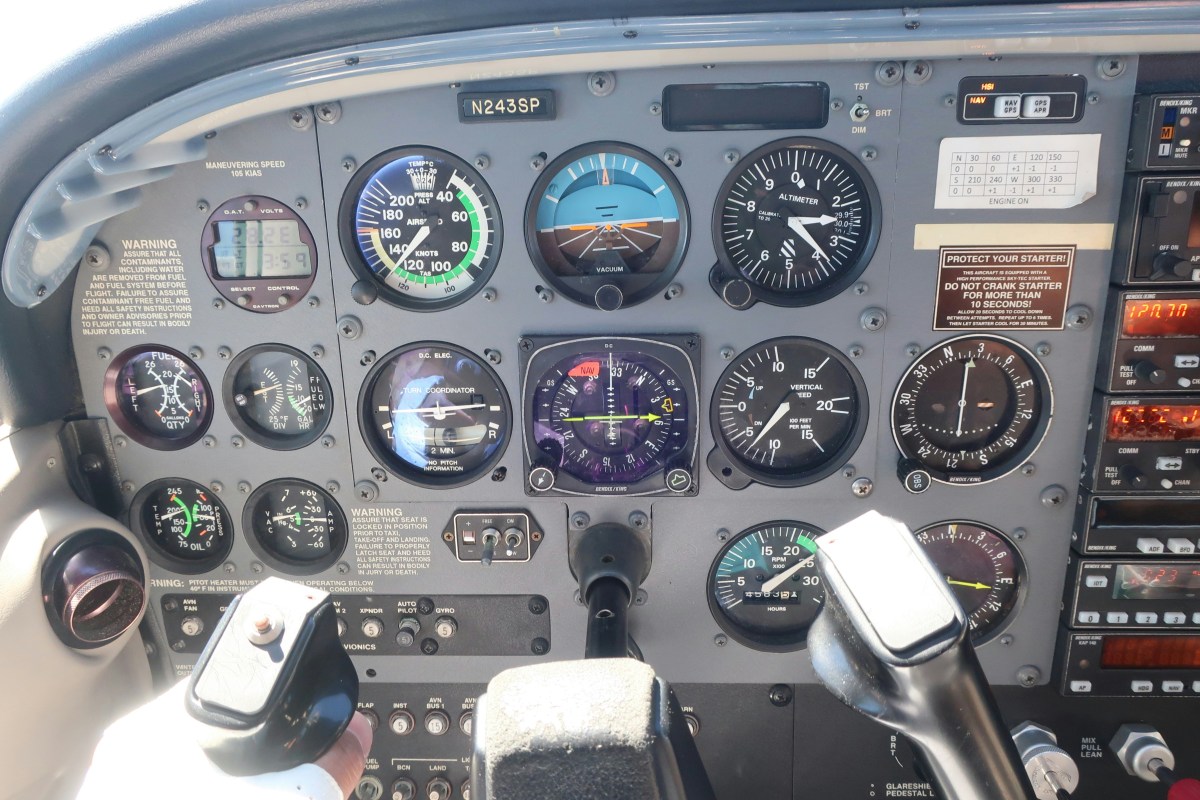
The CFII adds a new dimension to instruction: teaching students to fly the airplane without looking outside. You’ll learn to evaluate a student’s instrument scan, recognize the onset of spatial disorientation before it becomes dangerous, and run realistic IFR scenarios — holds, approaches, partial-panel emergencies — safely from the right seat.

TRAINING FOCUS
- Instrument teaching fundamentals — adapting core FOI concepts to instrument instruction
- Approach and procedure instruction — teaching precision and non-precision approaches, holds, and departures
- Scenario-based IFR training — simulated system failures, lost communications, and partial-panel work
- Ground instruction — weather, IFR flight planning, and the regulations specific to instrument operations
-
Applicants must hold a CFI – Airplane certificate and an instrument rating, and must pass the CFII knowledge and practical tests.
COMING SOON — PART 141 TRAINING: Our CFI-Airplane candidates train under Part 61 today. A Part 141 instructor course is in development and will bring the same structured, stage-based CFI curriculum already proven in our helicopter program to the fixed-wing side.
FREQUENTLY ASKED QUESTIONS
-
A CFI can teach private and commercial students, including the basic instrument skills in the Private course. The instrument instruction required for an Instrument Rating needs a CFII, and so do the 10 hours of instrument training for the Commercial. Only a CFII can endorse a student for the instrument checkride. CFIIs can also give Instrument Proficiency Checks to rated pilots whose currency has lapsed.
-
You need a CFI with an Airplane rating and an Instrument Rating on your pilot certificate. There’s no separate minimum-hours requirement for the CFII. That said, you’ll get far more out of the course if your own instrument flying is precise and current. If it’s been a while since you flew IFR, we’ll start with a refresher in the simulator.
-
Your student is heads-down and you’re the safety pilot, so you watch for traffic while also assessing their scan. You’ll learn to spot scan breakdowns early, to set up realistic failures without warning, and to brief approaches clearly in the busy SoCal Approach environment. Knowing an approach well and being able to teach it well are different skills. This course focuses on the second.
-
There’s one FAA knowledge test, the Instrument Flight Instructor Airplane test. As a current CFI, you don’t retake the FOI. Then there’s a practical test, where you teach instrument procedures to the examiner on the ground and in the airplane. Most candidates find it shorter than the initial CFI checkride but just as detailed on instrument procedures.
-
Our AATD is where you practice being the instructor. You set up failures, freeze the sim mid-approach to debrief, and rehearse how you’ll explain a hold entry before trying it in the air. Instructing in the sim is also a skill in itself: once you’re a CFII, much of your instrument teaching will happen there. See the AATD.
-
Instrument students fly a lot and fly consistently, so CFIIs tend to build hours faster. Many flight schools, including ours, prefer to hire instructors who hold both ratings. The instrument teaching also keeps your own IFR skills sharp for airline interviews and simulator evaluations. The next milestone after that is your ATP.